
Make room for the cat’s history

Pet insurance for old cats

Check whether a new policy is available, protect useful existing coverage and budget separately for care that remains yours.

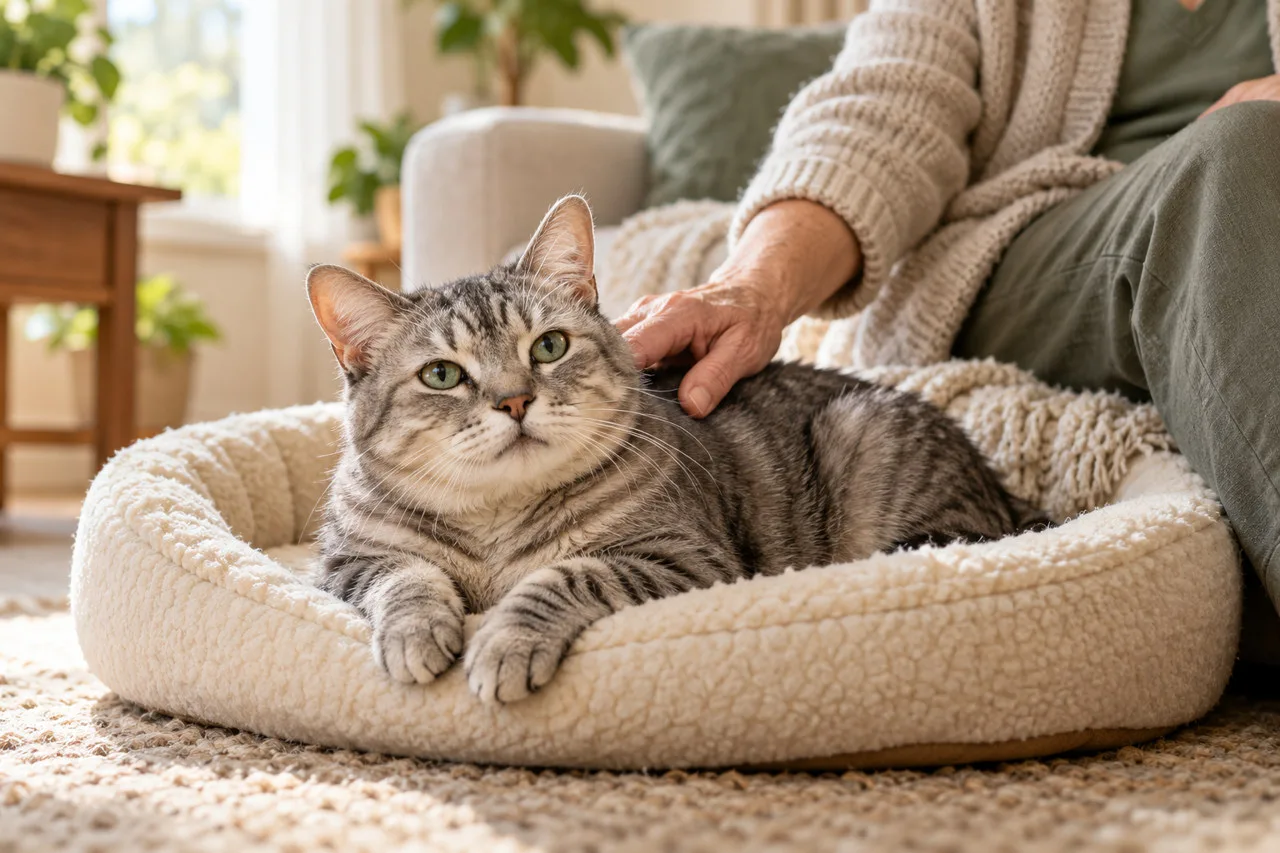
Silver tabby cat resting in a low cream bed beside its seated owner
✓ Policy-first ✓ Independent ✓ Useful checks
Direct answer
An old cat may still be eligible for pet insurance, depending on the insurer’s enrollment rules and the offered plan. Age alone is not the same as a pre-existing medical condition. A new policy can be useful for eligible future events, but it should not be expected to pay for every condition, symptom or treatment already in the cat’s record.
FAQ

Start with two different questions

Can this cat enroll?

Check the maximum age for new enrollment, any minimum age, location and available plan type. An insurer’s age rule is a product rule, not a judgment about the cat’s health.

What would the policy exclude?

Ask how prior symptoms, diagnoses and ongoing treatment affect claims. Acceptance into a plan does not establish that those issues are covered.

For a concrete eligibility example, Pets Best currently advertises no upper age limit for cat enrollment. That does not make its coverage unlimited in scope: the offered policy still has exclusions and payment terms. Other providers can set different entry rules.

If a quotation tool offers only a narrower plan, read what changed. An accident-only offer does not become illness protection because it was issued for an older cat.

What to know

Do not write off new changes as “just old age”

Cornell’s feline-health guidance emphasizes that aging itself is not a disease and that changes in health or behavior deserve veterinary attention. A change in appetite, drinking, litter-box habits or mobility is information to discuss with the veterinarian, not something to leave unexamined for insurance reasons.

For insurance, an earlier symptom can matter even if the final diagnosis is later. Keep an honest record of what you noticed and when, along with the clinic’s assessment. Do not guess a diagnosis in an application or suppress a genuine observation to make a new policy appear more useful.

The insurance task is to understand how the actual medical record will be treated. The care task is to help the cat get appropriate attention. Neither is improved by delaying an appointment to see whether a waiting period will end.

Pet profile

If your cat is already insured, review before replacing

An established policy may provide useful protection for a condition that arose while it was in force. A replacement insurer can assess that same history under its own pre-existing-condition definition. Compare the effect on continuing care before giving up the old contract for a different price or brand.

Ask the current insurer how renewal, benefit changes and coverage of ongoing eligible conditions work. Then ask a potential replacement provider how it would treat the cat’s history. Save the responses and any policy wording they identify.

Do not assume a gap-free calendar makes two different contracts continuous for medical-history purposes. Conversely, do not assume you must keep a policy regardless of its terms. The decision needs a comparison of what protection would actually be lost or gained.

Cost & value

Separate the cat’s care into useful budget categories

Category What to verify
Routine examinations and screening Ask the veterinarian what is recommended. Check any explicit preventive benefit rather than assuming medical insurance pays for healthy-pet screening.
Management of an existing condition Confirm the position under current coverage or the new policy’s exclusions. Keep a direct budget for amounts that will not be insured.
A possible new illness or injury Review eligible medical services, cost sharing and the limit. No guide can guarantee that an individual future claim will qualify.
Dental assessment and treatment Check the specific dental wording, prior dental history and any cleaning benefit. Do not collapse cleaning and treatment into one assumed allowance.

If tests are performed at a visit, the clinical reason matters. Keep the veterinarian’s record and an itemized invoice so a screening test is not casually treated as identical to a diagnostic test for symptoms. Accurate classification supports a clear claim; it does not guarantee payment.

Pet profile

When an older cat arrives with incomplete records

Collect what you can from the shelter, rescue, previous caregiver and treating clinics. Ask how the insurer handles a documented age estimate or missing history. Do not assume that an absence of paperwork proves an absence of previous signs.

Arrange veterinary care based on the cat’s needs and ask what baseline examination documents the insurer expects. Keep the clinical record as it was written, including uncertainties. If an insurer cannot assess a question until records are reviewed, treat the answer as pending rather than as approval.

An older cat’s policy should fit alongside the care you can reliably provide. A manageable premium, understandable exclusions and an accessible reserve for care are more useful than a reassuring label with unclear terms.

Evidence

Sources and policy context

These public references support the consumer or veterinary context. Named insurer details were checked in official product materials; the policy offered for your pet and state determines the actual terms.

Next step

Compare Current Pet Insurance Rates

Check current options for your pet and location, then compare the policy details, exclusions, costs, and eligibility before choosing.

Compare the policy before you choose Check the actual offer, exclusions and out-of-pocket terms.
See Rate Options